
Waterbase vs. 2-Part Finishes for Cabinets: Why We Use Waterbase
January 22, 2026
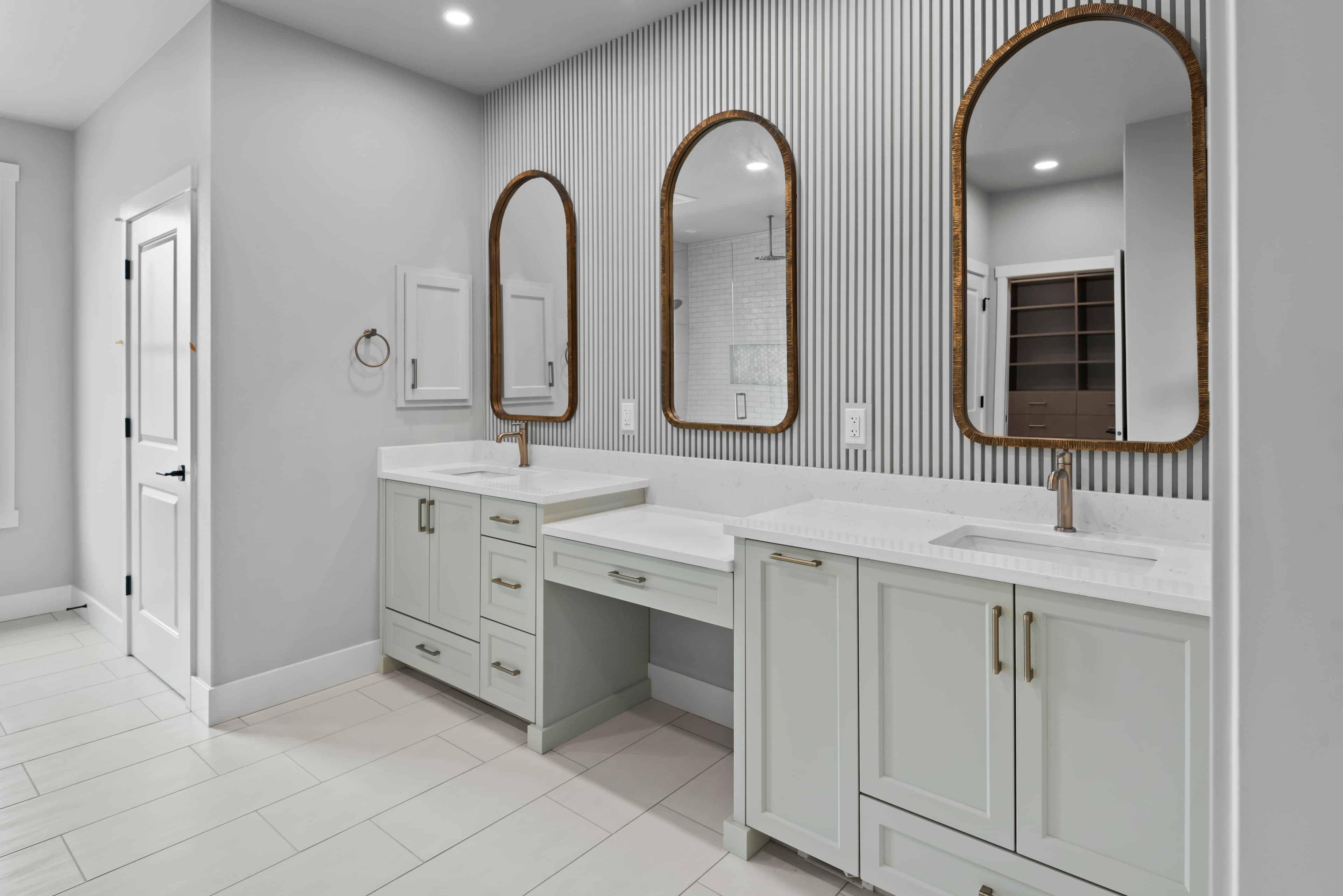
Once you’ve settled on a door style and a wood or paint color, there’s a question most homeowners never even know to ask, but it has a real impact on how your cabinets look, smell, and hold up: what kind of finish is actually being sprayed onto them?
The two main options in the cabinet industry are waterbase finishes and 2-part (conversion varnish) finishes. Both can produce a beautiful, durable result in the hands of a skilled finisher, but they’re genuinely different products with different tradeoffs. Here’s how we think about it, and why waterbase is our standard at Hill Country Cabinets.
What’s the Difference?
2-part finishes (often called conversion varnish, or “CV”) are catalyzed coatings, meaning a hardening agent is mixed into the finish right before spraying, triggering a chemical cure. This creates an extremely hard, durable surface and has been the traditional standard in cabinet shops for decades because of how tough the cured film is.
Waterbase finishes use water as the primary carrier instead of solvents, with the finish curing largely through evaporation and a chemical cross-linking process (modern waterbase formulas have come a long way from the waterbase products of 20 years ago). Waterbase technology has advanced significantly in the last decade, closing much of the durability gap that used to exist between the two.
Why We Use Waterbase
Lower VOCs and better indoor air quality. This is the big one for us. 2-part finishes release significant volatile organic compounds (VOCs) and formaldehyde-related byproducts during curing, both during the spraying process and for a period afterward as the finish continues to off-gas. Waterbase finishes contain dramatically fewer VOCs, which means less harsh odor in your home during and after installation, and a healthier indoor environment for your family, especially in kitchens where you’re preparing food.
Color stability over time. 2-part finishes have a tendency to yellow or amber slightly as they age, which is especially noticeable on white and light-painted cabinets, a bright white can shift toward cream or ivory over several years. Waterbase finishes stay clear and true to color for much longer, which matters if you’ve chosen a crisp white or a specific color-matched paint.
Faster, cleaner cure. Waterbase finishes dry to the touch faster and don’t require the same off-gassing period before cabinets are livable. That’s a real, practical benefit when you’re trying to move back into a kitchen after a remodel.
Environmental and safety considerations. Because of lower solvent content, waterbase finishing is safer for our shop team to work with day to day, and it’s simply the more responsible choice environmentally.
Where 2-Part Finishes Still Win
We’re not going to pretend waterbase is strictly better in every category, that wouldn’t be honest, and it’s not how we’d want a cabinet shop talking to us either.
2-part conversion varnish still has a slight edge in raw chemical and heat resistance in extreme scenarios, think commercial kitchens or surfaces facing constant harsh chemical exposure. For a residential kitchen, bath, or built-in, though, modern waterbase finishes hold up extremely well to everyday life: cleaning products, moisture, hand oils, and daily bumps and scrapes.
What This Means for Your Cabinets
If you’re choosing painted cabinets, a waterbase finish will:
- Stay true to color instead of yellowing with age
- Have a smoother, more even sheen with fewer application lines
- Come with a much lower odor footprint during your project
- Cure to a hard, cleanable surface that stands up to normal kitchen life
For stained or clear-coated wood cabinetry, waterbase finishes today let the natural wood grain and tone show through clearly and consistently, without the amber cast that older-generation clear coats used to add.
Our Approach
Every cabinet we build gets sprayed with professional-grade waterbase finish in our shop, applied in a controlled environment with multiple coats and proper cure time between each, not brushed on-site or rushed. That process is a big part of why our finishes come out smooth, consistent, and built to last.
If you’re comparing quotes from different cabinet shops, it’s worth asking directly what finish system they use and why. It’s one of those details that doesn’t show up in a photo but makes a real difference five years down the road.
Ready to talk through your project?
Book a Design Consultation